Worlds create the room
A decision can happen inside a selected work, personal, client, market, or project context. The room is chosen before the run starts.
 Manwe
Manwe Ontology
Ontology is Manwe's trust layer for memory. It keeps context scoped to selected Worlds, separates suggestions from usable Memory, and shows what Manwe can see before a run begins.
Why it exists
A normal chat can remember too much, too vaguely, or for the wrong reason. A test prompt, stale assumption, fictional scenario, or bad extraction can become an invisible premise later.
Manwe takes the opposite path: record possibilities first, then let the user decide what becomes durable memory. The goal is not an assistant that absorbs everything. The goal is a decision system whose context can be inspected, challenged, replayed, and shut off.
Core model
A decision can happen inside a selected work, personal, client, market, or project context. The room is chosen before the run starts.
Completed runs can suggest what Manwe should remember, but suggestions do not become usable context until you promote them.
What Manwe sees shows the profile, selected worlds, promoted memory, and relationships that can enter the next run.
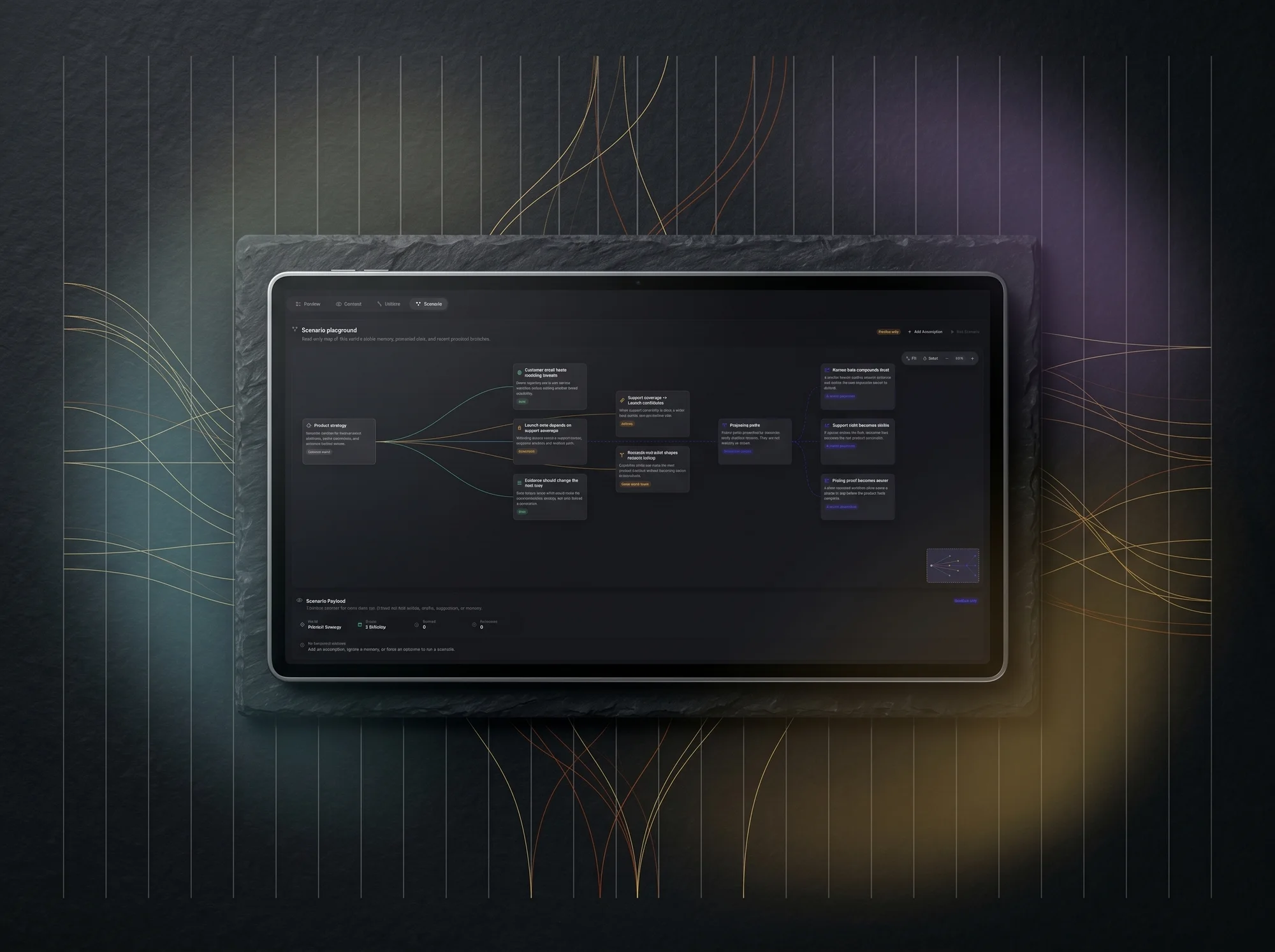
Temporary assumptions, ignored memory, and forced outcomes can be tested without changing real world memory.
Memory lifecycle
Audit surface
The app renders selected world context as read-only: profile, worlds, active promoted memory, and relationships that can enter the run. It tells the model to use those facts when relevant and not invent stack, schema, revenue, team, customers, infrastructure, identity, or history beyond the selected context, the topic, uploaded documents, or cited evidence.
If context is not visible in What Manwe sees, it should not be expected to affect the run. That is the practical promise behind the ontology layer: inspect the room before you ask advisors to reason inside it.
What memory can hold
Scenarios
Mac beta
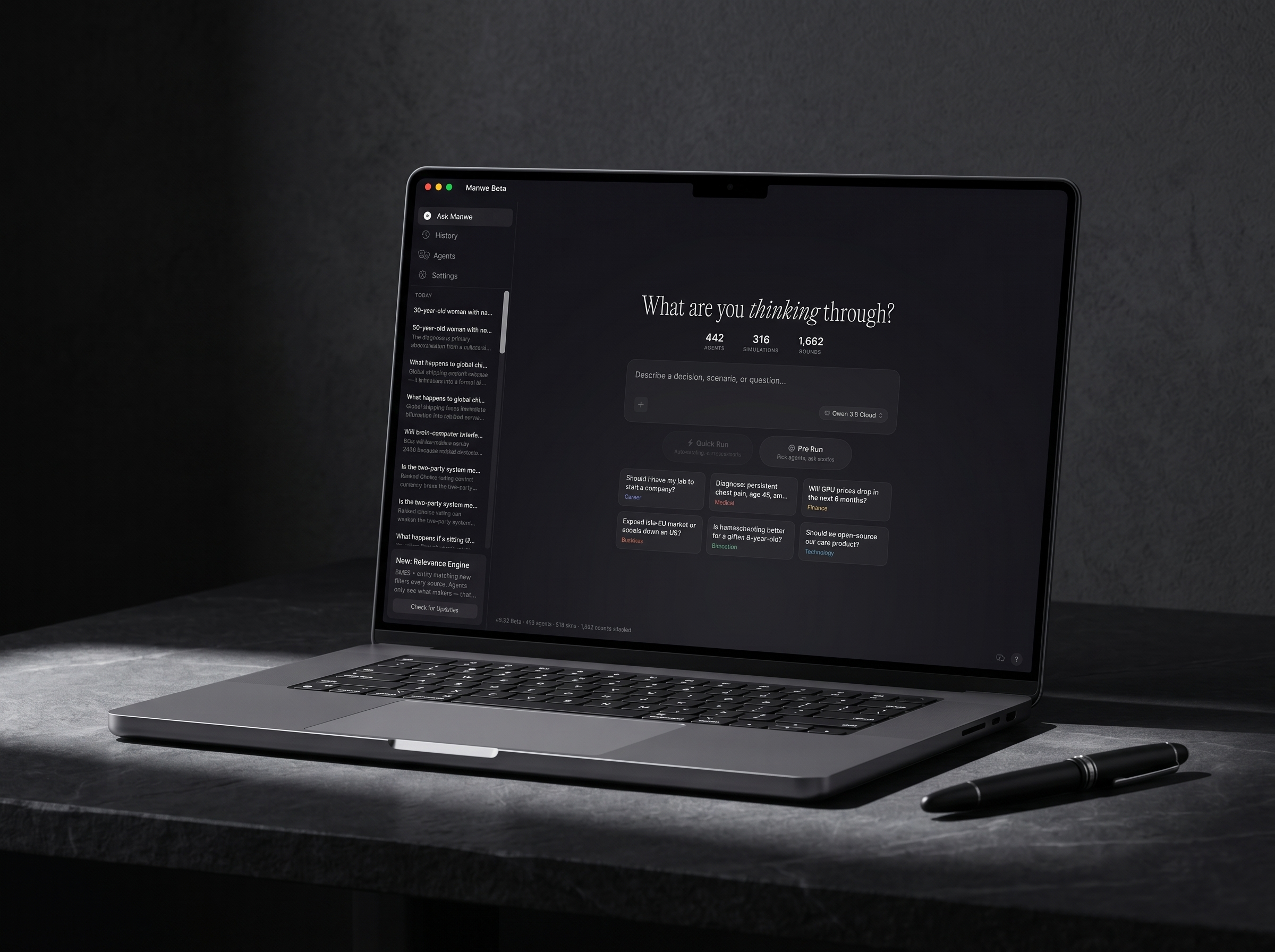
The web app remains the fastest path for cloud decision records. The Mac beta is where deeper Worlds, governed memory, What Manwe sees, and scenario testing live.
FAQ
Ontology is Manwe's governed decision memory: selected worlds, promoted memory, relationships, and an inspection surface that shows what can enter a run.
No. The point of the ontology layer is to avoid broad history dumps. Suggestions and drafts stay out until a user promotes stable memory.
What Manwe sees is the audit surface for active context. If profile context, selected worlds, promoted memory, or relationships do not appear there, you should not expect Manwe to use them.
Completed world runs can create pending suggestions. A user can reject them, keep them as drafts, or promote stable facts, constraints, goals, decisions, risks, preferences, deadlines, or relationships into Memory.
The web app is the fastest path for cloud decision records. The deeper ontology workflow is centered on the Mac beta: Worlds, memory review, What Manwe sees, scenarios, and local-first context.